
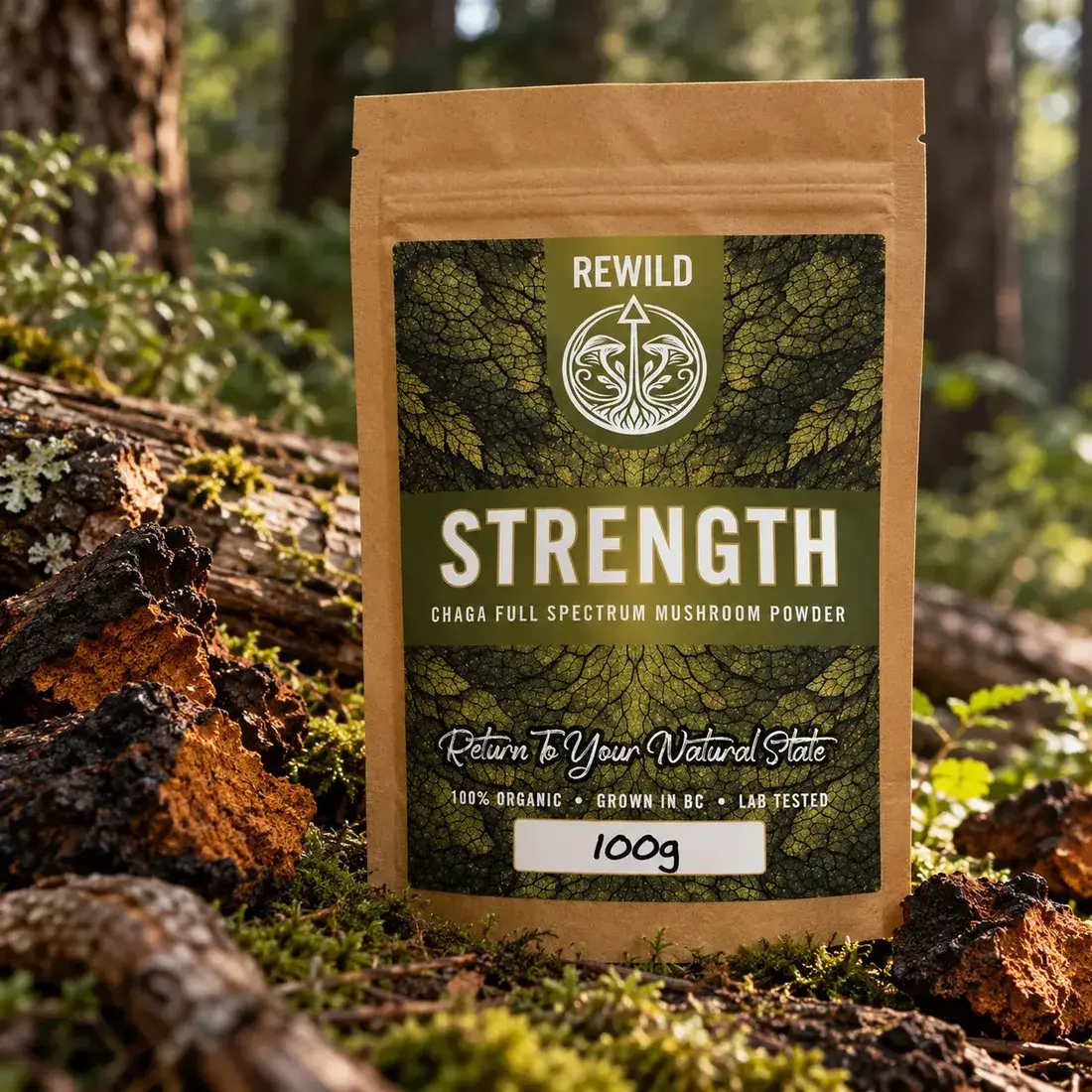
Learn · Mushroom guide
ChagaChaga mushroom (Inonotus obliquus) guide
Inonotus obliquus
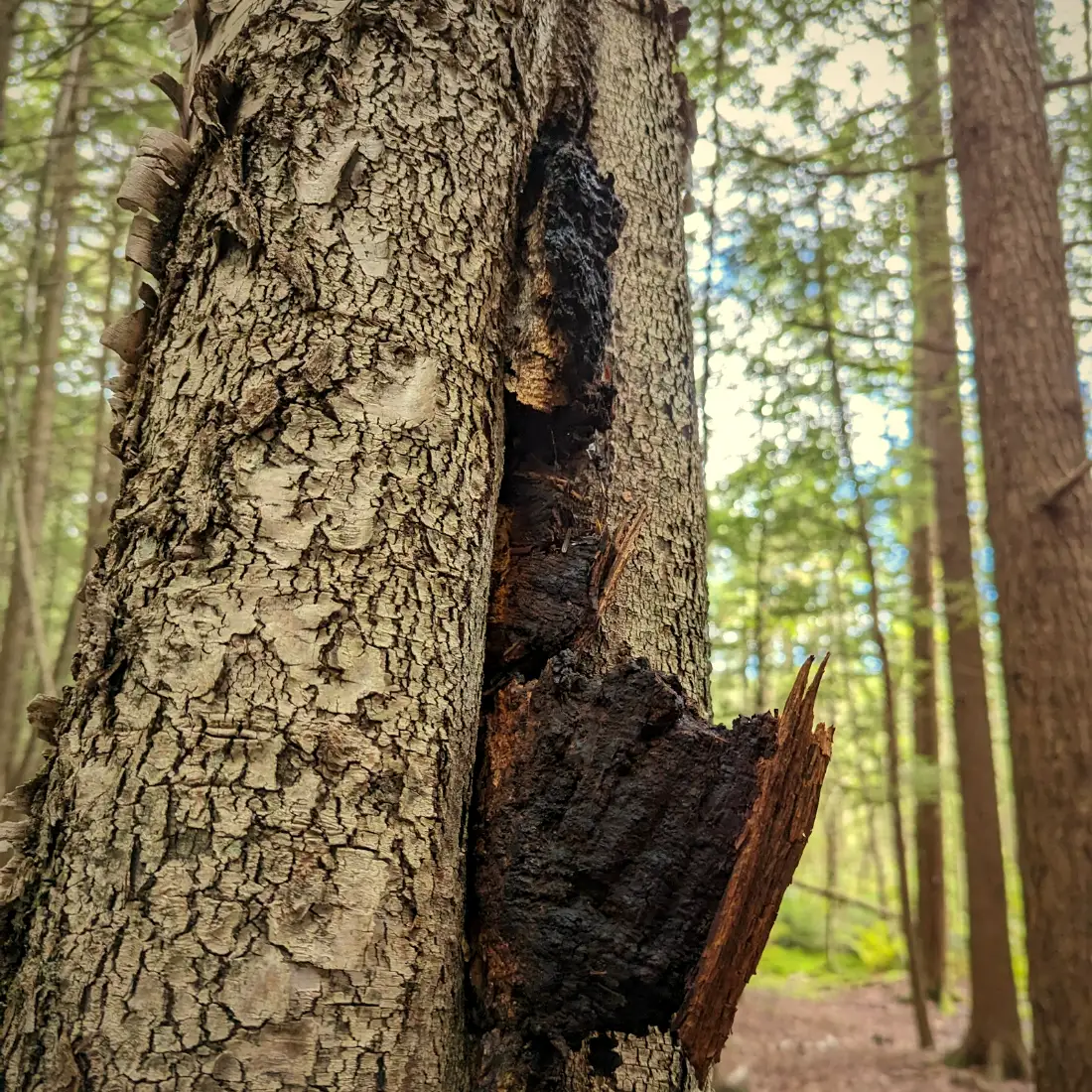
It looks like a lump of burnt charcoal on the side of a birch tree. Break it open and it is rusty gold inside.
Also called: clinker polypore, birch conk, cinder conk
Meet the mushroom
Chaga is not a typical mushroom at all. What people harvest is a sterile mass called a sclerotium, a dense knot of fungal tissue that bursts through the bark of living birch trees. The outside is black, cracked and crusty. The inside is a corky orange-brown.
It grows in cold northern forests across Canada, the northern US, Scandinavia and Russia, almost always on birch. A single conk can take many years to grow, and the tree it lives on is slowly being colonized the whole time.
A little history
Chaga has been brewed as a tea for centuries in northern Russia and Siberia, often as an everyday drink rather than anything special. Communities across the boreal forest have their own uses for it too, including carrying fire, since a smouldering piece of chaga holds an ember for a long time.
Its popularity has grown fast, and that has a cost. Wild chaga grows slowly and is easy to over-harvest. Growing it indoors means no birch forest gets stripped to fill a pouch.
How ours is grown
- Grown in BC
- Cultivated indoors by our partner grower in British Columbia, using solid-state fermentation on certified organic grain.
- The whole organism
- Each powder contains the fruiting body, mycelium, stroma, natural fibre and the compounds the mycelium releases as it grows, together with the organic grain it grew on.
- DNA verified
- Every lot is identified by DNA (qPCR) and must match an authenticated reference sample of the species on the label.
- Made to last
- Water activity is kept under 0.6 so the powder stays dry and stable for three years from production.
What every lot is tested for
Release standards every lot has to meet before it ships.
| Total polysaccharides | 50% or more |
| 1,3-1,6 beta-glucans | 30% or more |
| Alpha-glucans (starch) | 10% or less |
Latest lot (240227-IO-4037): Beta-glucans 62.1%, Total polysaccharides 71.6%. Full results
Clean by design
- Certified organic (Canada and US)
- Non-GMO
- Gluten free (under 15 ppm)
- Vegan
- Kosher
- Halal
- Made in a GMP-verified facility
- No added fillers, colours, preservatives or desiccants
Seven microbial checks on every lot: total plate count, yeast, mould, coliforms, E. coli, Salmonella and S. aureus. No pesticides are used during production.
Purity
Every lot is DNA verified, tested for gluten and water activity, and screened for microbes before release.
Taste and use
What it's like.
- Colour
- Soft almond
- Aroma
- Mildly savoury, smoky, earthy
- Flavour
- Savoury, toasty, nutty
Smooth and a little smoky. Try it in coffee, as a tea with a splash of milk and maple, or stirred into a smoothie. It suits any time of day.
Go deeper
If you want to fall all the way down the rabbit hole, start with mycologist Paul Stamets. His book Mycelium Running and the 2019 documentary Fantastic Fungi are two of the best introductions to how fungi shape the living world, from forest soil to the food on your plate.
Not sure which one fits your day? Build your stack. It takes about a minute.
Or keep reading here: Cordyceps, Lion's Mane, Reishi, or the journal.
This guide is for education only and is not medical advice.
An invitation to come back.
Join the Rewilders. Field notes, new batches and lab results, a few times a month. No noise.