
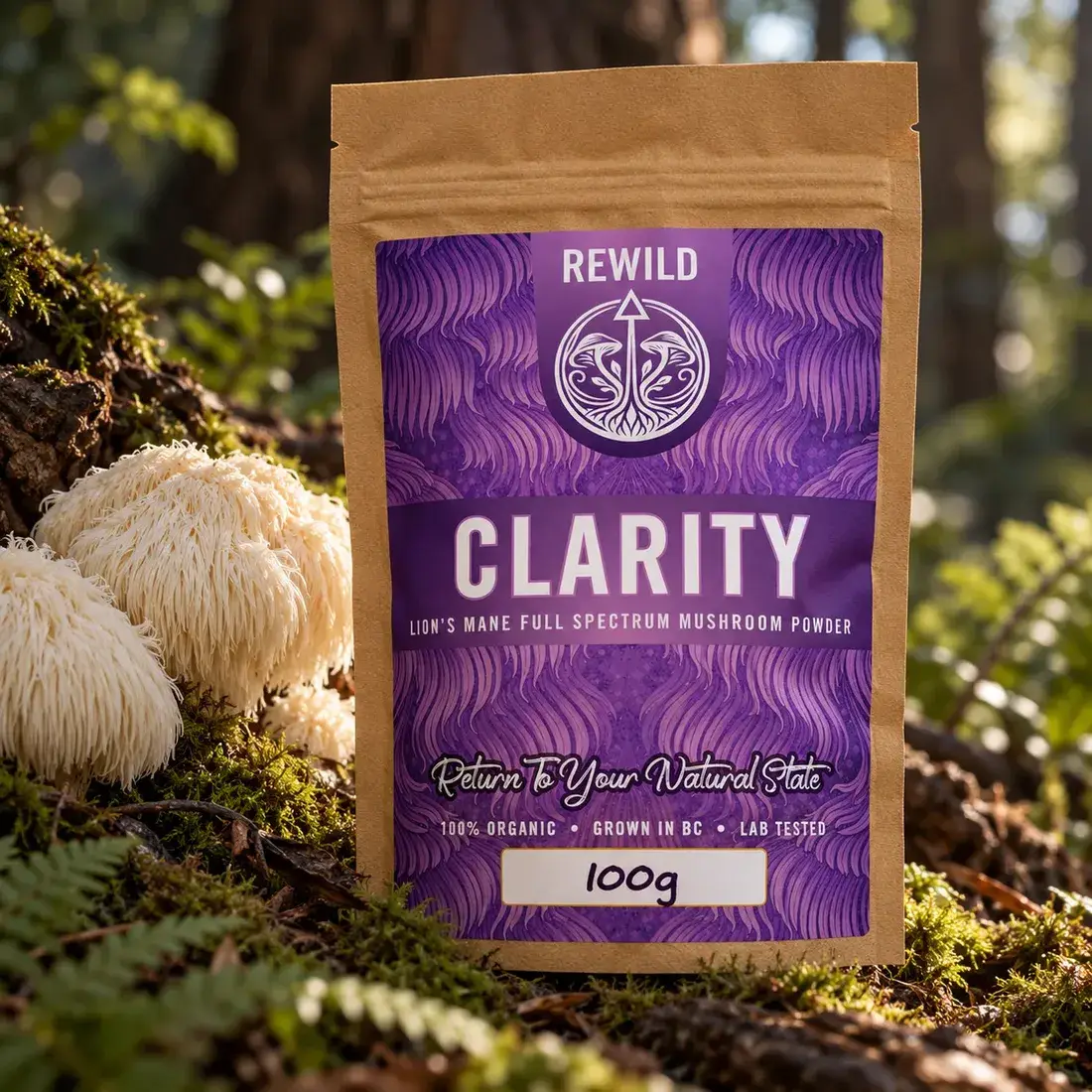
Learn · Mushroom guide
Lion's ManeLion's Mane mushroom (Hericium erinaceus) guide
Hericium erinaceus
A white cascade of soft spines that grows on hardwood trees. Gourmet food, forager's prize and one of the best known mushrooms in the world.
Also called: bearded tooth, pom pom mushroom, yamabushitake
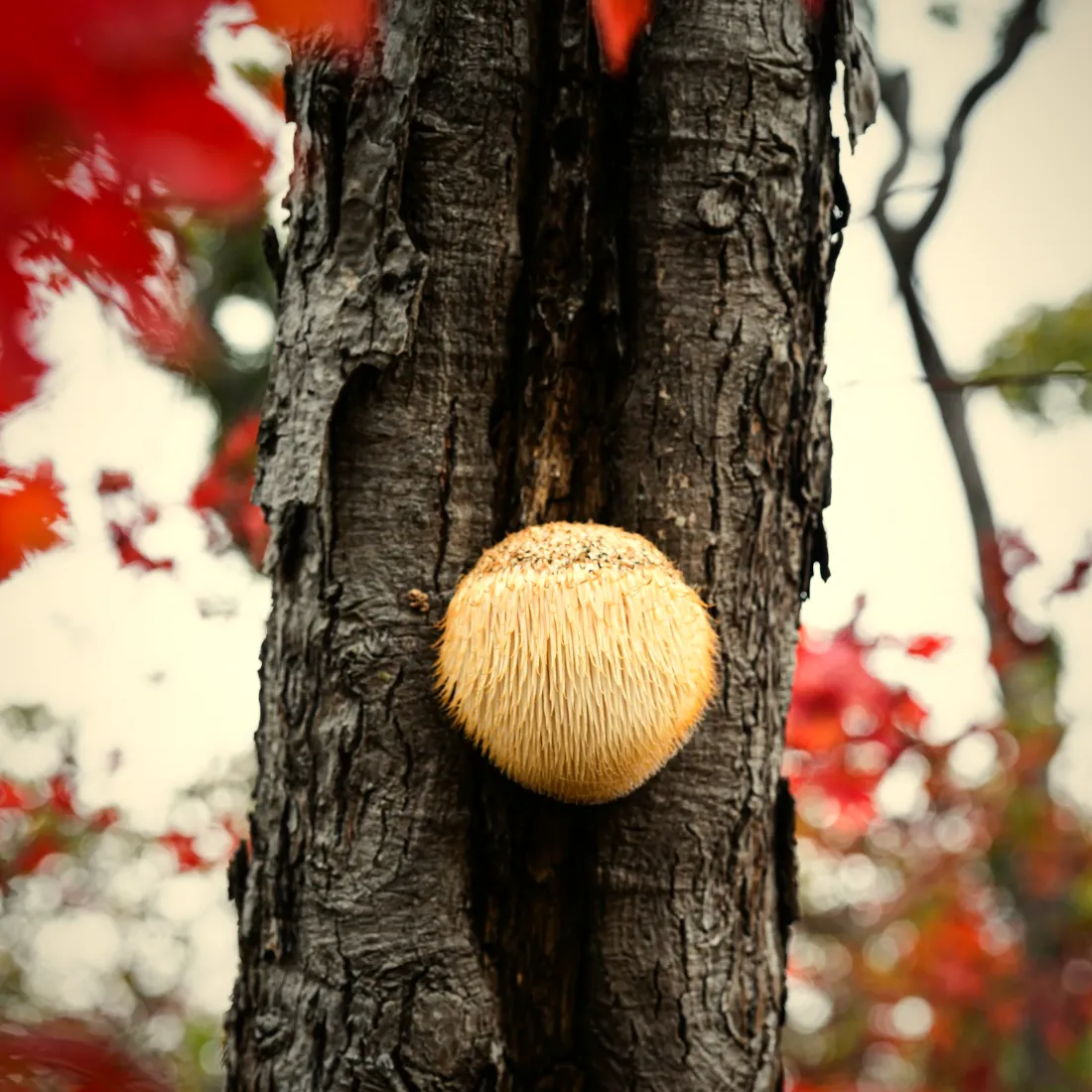
Meet the mushroom
Lion's Mane is a tooth fungus. Instead of gills under a cap, it grows as a single white mass of long, hanging spines that look like icicles, a beard or a lion's mane, depending on who you ask. It ages from bright white to a soft yellow-brown.
In the wild you will find it on hardwoods like oak, beech, maple and birch, often high up on a wounded trunk or a fallen log in late summer and fall. It is found across North America, Europe and Asia, but it is rarely common anywhere, which makes spotting one a good day in the woods.
A little history
Lion's Mane has been eaten for centuries in China and Japan. In Japan it is called yamabushitake, after the yamabushi, mountain monks whose robes carried tufted pom poms. In China one of its names translates to monkey head mushroom.
Chefs love it too. Sliced and seared in butter, fresh Lion's Mane has a texture and taste that people often compare to crab or lobster. It is also one of the mushrooms mycologist Paul Stamets has done the most to popularize, through his books and the documentary Fantastic Fungi.
How ours is grown
- Grown in BC
- Cultivated indoors by our partner grower in British Columbia, using solid-state fermentation on certified organic grain.
- The whole organism
- Each powder contains the fruiting body, mycelium, stroma, natural fibre and the compounds the mycelium releases as it grows, together with the organic grain it grew on.
- DNA verified
- Every lot is identified by DNA (qPCR) and must match an authenticated reference sample of the species on the label.
- Made to last
- Water activity is kept under 0.6 so the powder stays dry and stable for three years from production.
What every lot is tested for
Release standards every lot has to meet before it ships.
| Total polysaccharides | 50% or more |
| 1,3-1,6 beta-glucans | 30% or more |
| Alpha-glucans (starch) | 10% or less |
Latest lot (250716-HE100-4237): Beta-glucans 52.0%, Total polysaccharides 60.0%. Full results
Clean by design
- Certified organic (Canada and US)
- Non-GMO
- Gluten free (under 15 ppm)
- Vegan
- Kosher
- Halal
- Made in a GMP-verified facility
- No added fillers, colours, preservatives or desiccants
Seven microbial checks on every lot: total plate count, yeast, mould, coliforms, E. coli, Salmonella and S. aureus. No pesticides are used during production.
Heavy metals
Every lot must test under these limits.
| Arsenic | under 0.1 ppm |
| Cadmium | under 0.1 ppm |
| Lead | under 0.25 ppm |
| Mercury | under 0.1 ppm |
Taste and use
What it's like.
- Colour
- Warm ivory
- Aroma
- Clover, earthy, a hint of the sea
- Flavour
- Savoury, delicate, earthy
Gentle and savoury, so it works in coffee, tea, soups, sauces and smoothies. Many people add it to their morning cup, or before deep work.
Go deeper
If you want to fall all the way down the rabbit hole, start with mycologist Paul Stamets. His book Mycelium Running and the 2019 documentary Fantastic Fungi are two of the best introductions to how fungi shape the living world, from forest soil to the food on your plate.
Not sure which one fits your day? Build your stack. It takes about a minute.
Or keep reading here: Cordyceps, Reishi, Chaga, or the journal.
This guide is for education only and is not medical advice.
An invitation to come back.
Join the Rewilders. Field notes, new batches and lab results, a few times a month. No noise.