
Learn · Mushroom guide
CordycepsCordyceps militaris mushroom guide
Cordyceps militaris
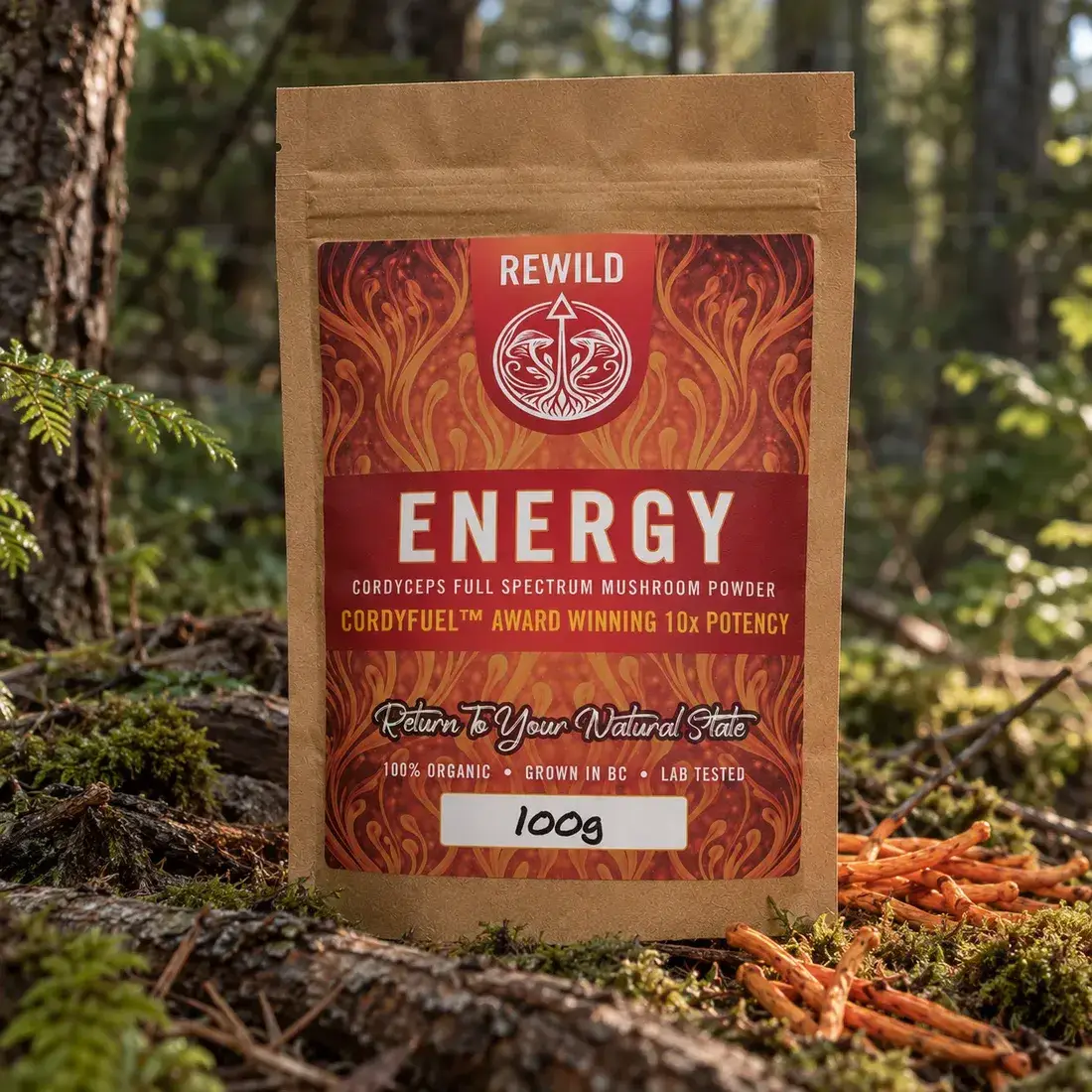
A bright orange club fungus with one of the strangest life stories in nature, and the mushroom behind CordyFuel™.
Also called: scarlet caterpillar club, orange cordyceps
Meet the mushroom
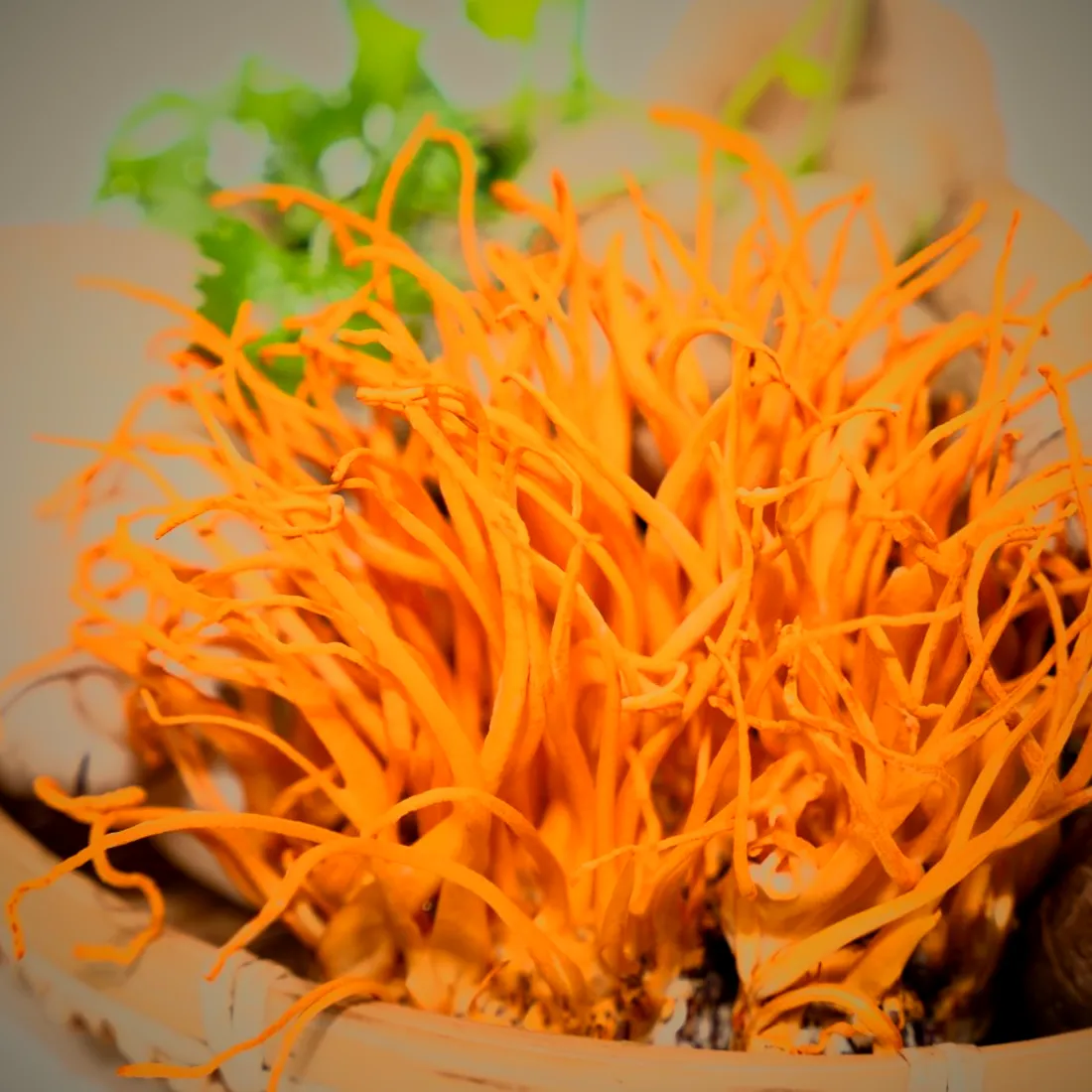
In the wild, Cordyceps militaris lives a double life. Its spores land on a moth or butterfly pupa buried in leaf litter, and the fungus quietly takes over its host. When it is ready to reproduce, it sends up slender orange clubs that poke through the forest floor. They look more like coral than a mushroom.
It belongs to a big family of insect-loving fungi found on almost every continent. Its famous cousin, the Himalayan caterpillar fungus (now called Ophiocordyceps sinensis), grows only on high Himalayan plateaus and has never been farmed at scale, which has made it one of the most expensive natural products on earth.
Cordyceps militaris is different. It grows happily on grain, so it can be cultivated indoors with no insects involved at all. That makes it the vegan, traceable member of the family.
A little history
Cordyceps has a long record in traditional Chinese and Tibetan practice, mostly through the wild Himalayan species. Herders noticed it on high mountain pastures centuries ago, and it became one of the most prized ingredients of the region.
Cordyceps militaris made its own mark in the lab. In 1950, researchers isolated a compound from it and named it cordycepin after the mushroom. Today cordycepin is one of the most studied compounds in the fungal world, and it is the main compound every lot of CordyFuel™ is tested for.
How ours is grown
- Grown in BC
- Cultivated indoors by our partner grower in British Columbia, using solid-state fermentation on certified organic grain.
- The whole organism
- Each powder contains the fruiting body, mycelium, stroma, natural fibre and the compounds the mycelium releases as it grows, together with the organic grain it grew on.
- DNA verified
- Every lot is identified by DNA (qPCR) and must match an authenticated reference sample of the species on the label.
- Made to last
- Water activity is kept under 0.6 so the powder stays dry and stable for three years from production.
What every lot is tested for
Release standards every lot has to meet before it ships.
| Cordycepin (UPLC) | 3 mg/g or more |
Latest lot (240807-CM300-4118): Cordycepin 5.7 mg/g, Cordycepin, independent lab 7.1 mg/g. Full results
Clean by design
- Certified organic (Canada and US)
- Non-GMO
- Gluten free (under 15 ppm)
- Vegan
- Kosher
- Halal
- Made in a GMP-verified facility
- No added fillers, colours, preservatives or desiccants
Seven microbial checks on every lot: total plate count, yeast, mould, coliforms, E. coli, Salmonella and S. aureus. No pesticides are used during production.
Heavy metals
Every lot must test under these limits.
| Arsenic | under 0.1 ppm |
| Cadmium | under 0.1 ppm |
| Lead | under 0.25 ppm |
| Mercury | under 0.1 ppm |
Taste and use
What it's like.
- Colour
- Beech wood
- Aroma
- Honeyed, floral, nutty
- Flavour
- Caramel, botanical, toasty
Mild and slightly sweet, it disappears into coffee, matcha, smoothies and oats. Most people use it earlier in the day, before training or a long afternoon.
Go deeper
If you want to fall all the way down the rabbit hole, start with mycologist Paul Stamets. His book Mycelium Running and the 2019 documentary Fantastic Fungi are two of the best introductions to how fungi shape the living world, from forest soil to the food on your plate.
Not sure which one fits your day? Build your stack. It takes about a minute.
Or keep reading here: Lion's Mane, Reishi, Chaga, or the journal.
This guide is for education only and is not medical advice.
An invitation to come back.
Join the Rewilders. Field notes, new batches and lab results, a few times a month. No noise.