How To Read A Mushroom Lab Report (COA) In Five Minutes
By Jade Stevens · October 5, 2026 · 5 min read
"Third-party tested" is printed on a lot of mushroom bags. It's a good sign. But the phrase on its own doesn't tell you much. The real information lives in the lab report, called a certificate of analysis, or COA.
A COA can look intimidating. Columns of numbers, test methods in capital letters, units you haven't seen since high school. The good news is you only need to know where to look. Here's how we read one.
1. Find The Lot Number
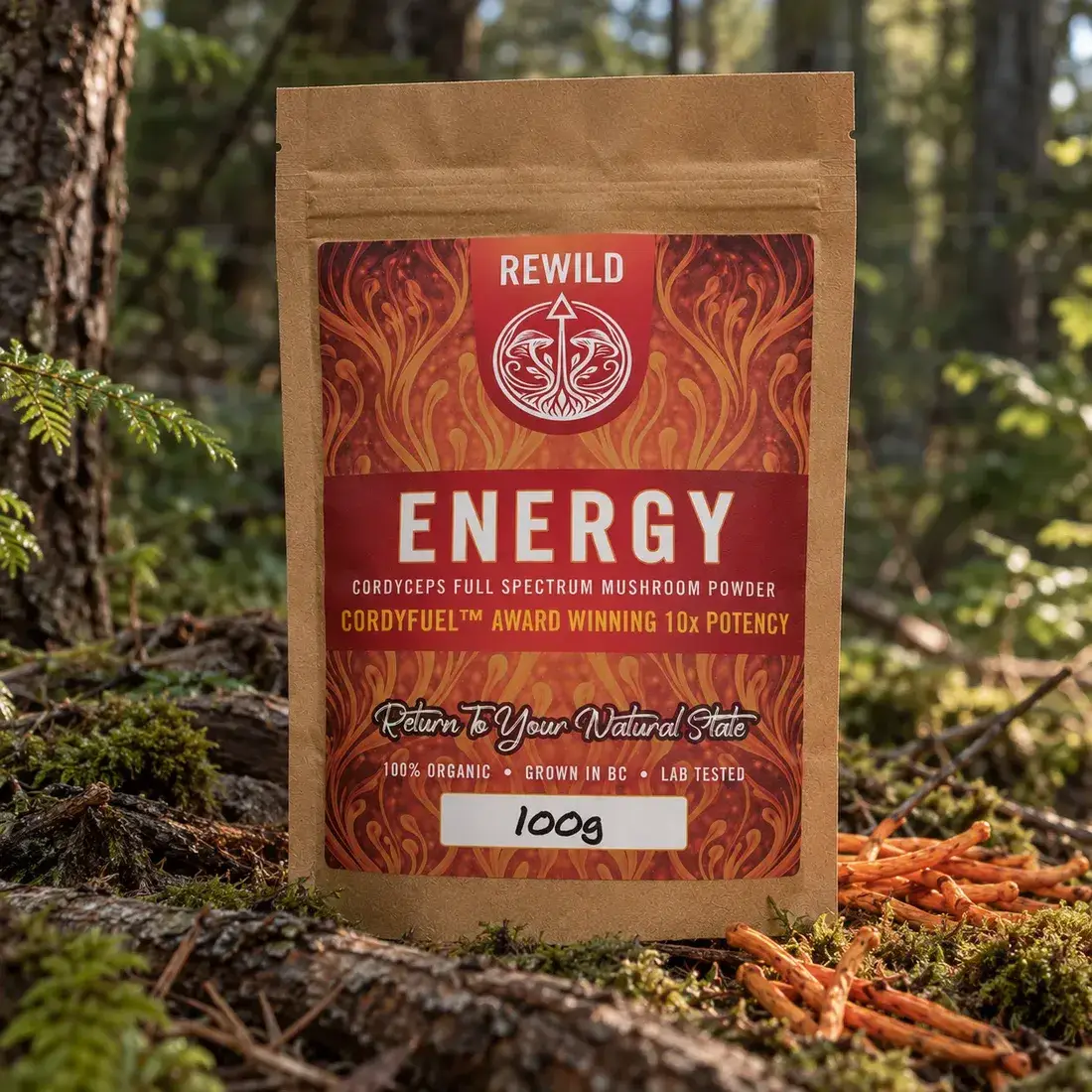
Every COA should be tied to a specific batch, called a lot. Our Energy powder, for example, has a recent lot numbered 240807-CM300-4118. That number should connect the report to real product.
If a report has no lot number, it's hard to know what was actually tested. Also check the date. A report from several years ago doesn't tell you much about what's in the bag today.
2. Check Identity: Is It The Right Mushroom?
This is the most basic question, and one of the most important. Is the mushroom in the bag the species on the label?
Labs answer this a few ways. DNA sequencing (you may see "Sanger sequencing") reads the organism's genetic code. Chemical fingerprinting (often listed as FTIR or HPTLC) compares the material to a known reference. Either is a good sign. A report with no identity test at all is worth asking about.
3. Read The Potency Numbers
This section tells you what's measurably in the powder. For functional mushrooms, the usual measurements are:
- Total polysaccharides: a broad measure of the complex carbohydrates in the powder.
- Beta-glucans (1,3-1,6): a more specific measure of the type of fibre mushrooms are known for. This number is more useful than total polysaccharides on its own, because a broad polysaccharide test can also pick up starch.
- Species-specific markers: for Cordyceps militaris, that's cordycepin, usually measured by UPLC or HPLC.
Look for two columns: the specification (the minimum the product has to meet) and the result (what this lot actually measured). For our Energy powder, the cordycepin specification is at least 3 mg/g. A recent lot measured 5.7 mg/g in-house and 7.1 mg/g at an independent lab. Its beta-glucan specification is at least 30%, and that lot came in at 42.8%.
A report that only says "pass" without showing numbers tells you a lot less than one that shows both.
4. Check Purity: What Shouldn't Be In It
This is the safety section. Mushroom powders are a food, so you want to see microbial testing. Our lots go through seven microbial checks: total plate count, yeast, mould, coliforms, E. coli, Salmonella and S. aureus.
You may also see limits for heavy metals such as arsenic, cadmium, lead and mercury, and, if the product is labelled gluten-free, a gluten result. Ours has to test under 15 ppm.
5. Look For Stability
Some reports include water activity, which shows how dry and shelf-stable the powder is. Dry powder keeps better. It's part of why every REWILD lot carries a three-year shelf life.
Red Flags Worth Asking About
- No lot number, or a lot number that doesn't match anything on the bag
- No lab name or no test methods listed
- Results with no specification to compare against
- A report that's several years old
- Testing on a raw ingredient, but not the finished product
- A company that won't share a report when you ask
None of these automatically mean a product is bad. They just mean you should ask more questions.
Where To See Ours
Our current numbers for every product are on our lab results page, including what each lot is tested for and what it measured. Full COA PDFs are available on request. Just ask and we'll send them.
Want the bigger picture on choosing a mushroom product? Start with how to read a mushroom label in Canada.